


Pedreguer, 02 October 2026
THE PEDREGUER ORGAN CELEBRATES ITS 30TH ANNIVERSARY: A LEGACY DESIGNED TO LAST FOR CENTURIES
The Rolser-Server i Pérez Foundation and Pedreguer Town Council are marking the anniversary with a retrospective exhibition that traces the history of a project launched to restore part of the town’s musical heritage and tradition
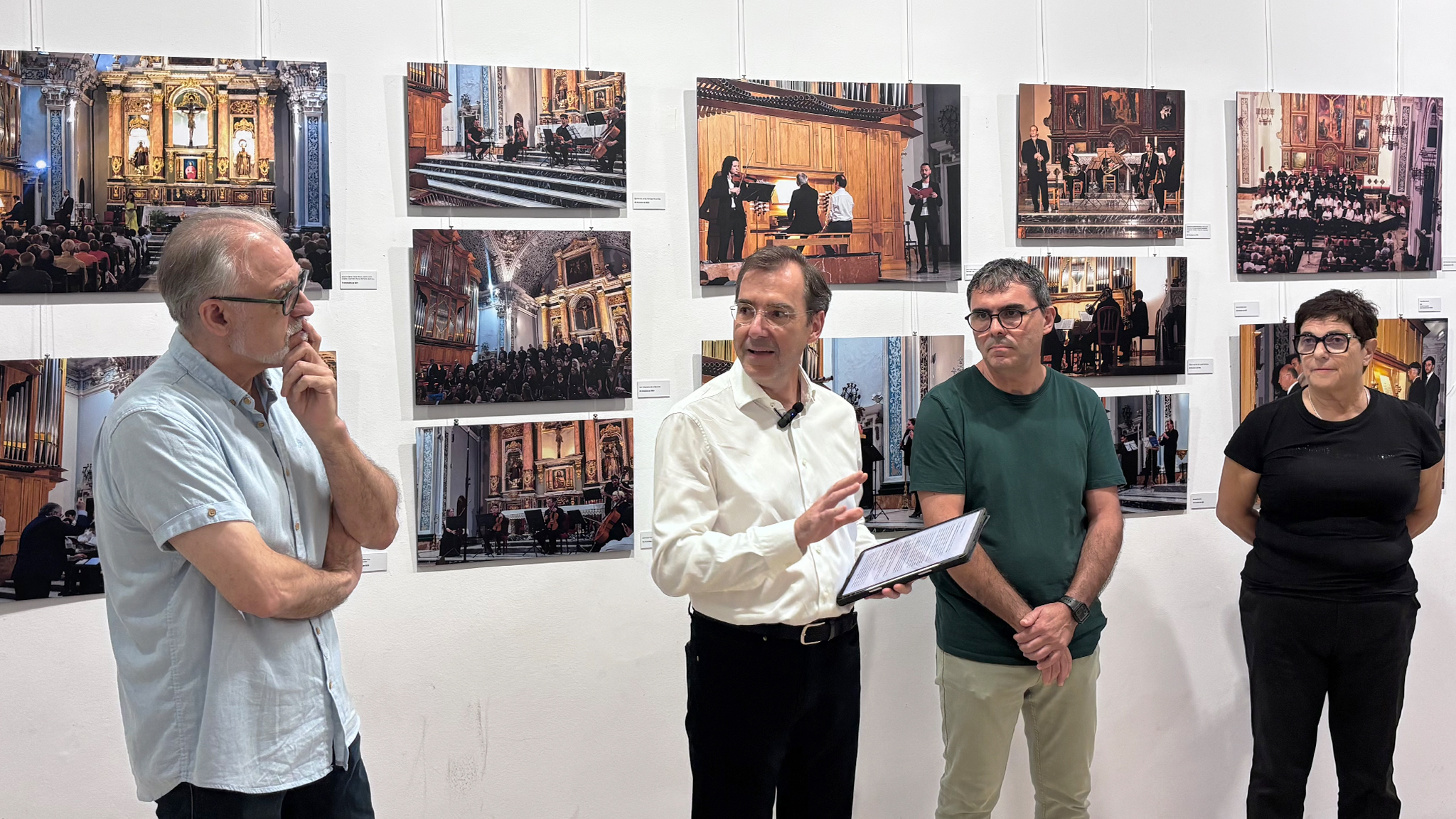
Some projects are conceived with the present in mind, whilst others are born with the aim of transcending it. Thirty years ago, Pedreguer took on the challenge of creating an organ that was not merely a musical instrument, but also a work of art and a cultural legacy capable of accompanying the town for generations to come.
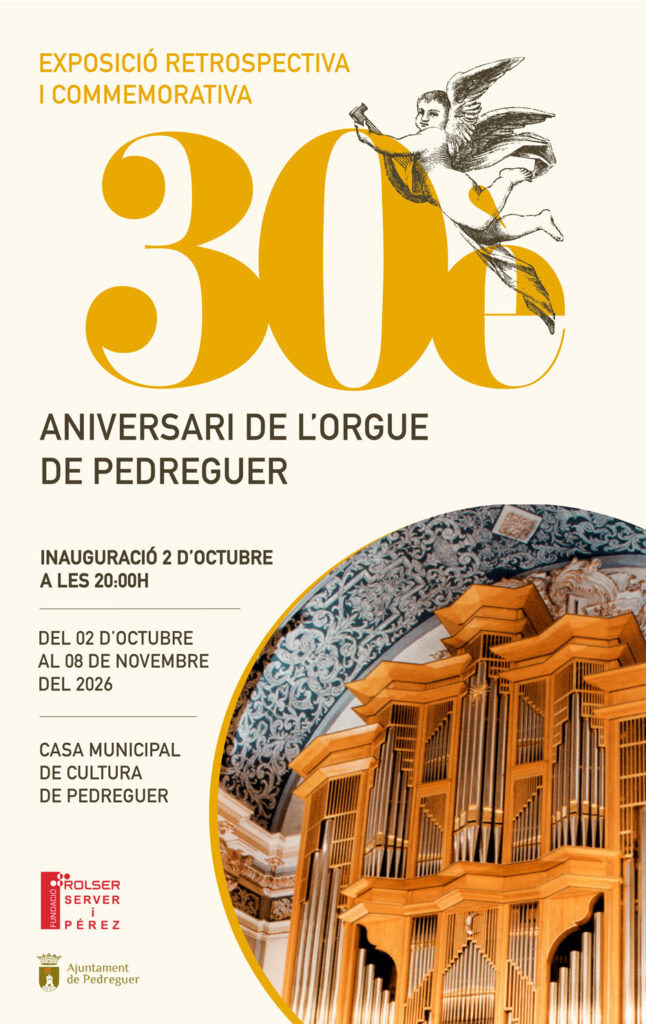
Three decades later, the Rolser-Server i Pérez Foundation and Pedreguer Town Council are commemorating that initiative with a retrospective exhibition marking the 30th anniversary of the Pedreguer Organ. The exhibition, which opened on Friday 2 October at the Municipal Cultural Centre, traces the history and legacy of this unique instrument and will run until 8 November 2026.
The exhibition also offers an insight into the process that led to the creation of the instrument, from its conception and construction to its role in the revival and promotion of organ culture in Pedreguer, highlighting the people, the knowledge and the collective determination that went into a project of this scale.
The history of the organ is closely linked to that of the Rolser-Server i Pérez Foundation. The initiative came from the Server Pérez family, who decided to commission the construction of a new organ for the Santa Creu Church in Pedreguer. In fact, the Foundation, established in 1994, was set up with the aim of promoting cultural activities in Pedreguer, particularly in the fields of music and art.
The project was commissioned from the renowned organ builder Gerhard Grenzing, whilst the design of its façade was entrusted to the architect Simon Platt. The challenge went far beyond simply building an instrument, as the aim was to create a musical and liturgical work that would be fully integrated into the church’s architecture and capable of helping to revive a centuries-old organ-building tradition.
“The organ perfectly embodies the Foundation’s raison d’être: to give back to Pedreguer a part of who we are and to help ensure that culture endures and is passed down from one generation to the next. Thirty years ago, a decision was made with an eye not only on the present, but also on the future. Today, we have a responsibility to continue safeguarding that legacy so that it remains alive for many years to come.”, says Paquibel Server, chair of the Rolser-Server Pérez Foundation.
1,500 pipes, nine tonnes and 6,000 hours of work
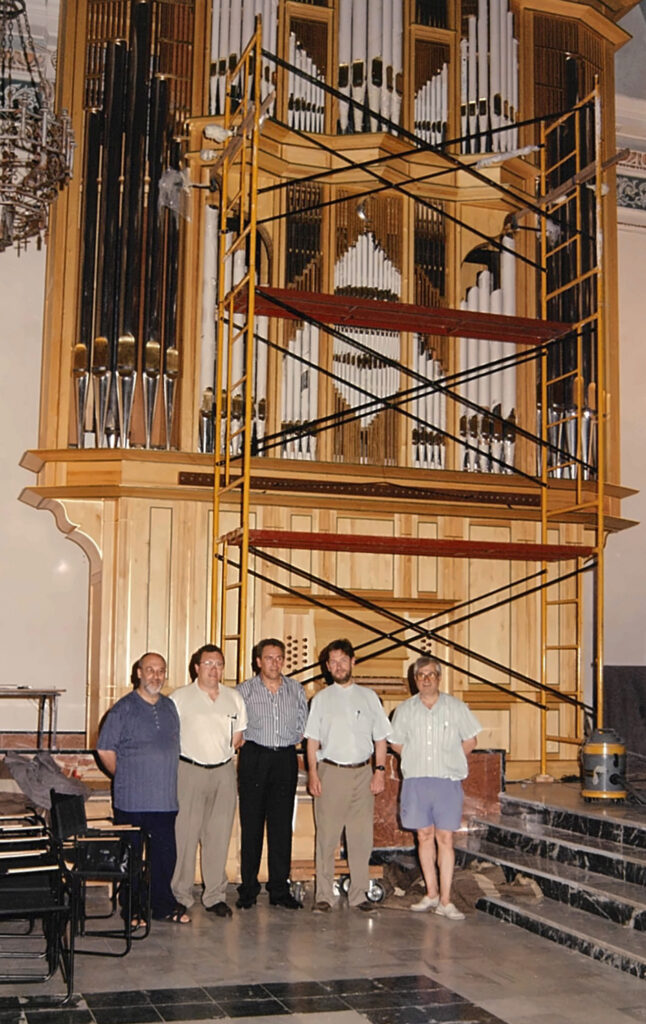
The scale of the project is also reflected in the figures. The Pedreguer organ consists of 1,500 wooden and tin pipes, has 24 stops, two manual keyboards and one pedal keyboard, and weighs approximately nine tonnes. Its construction took around 6,000 hours of work.
Each of its pipes was calculated and prepared taking into account the acoustic conditions of the Santa Creu Church. Neither its location nor its design were chosen at random: following various acoustic tests, it was decided to integrate it as a genuine ‘altarpiece organ’, making the architecture, mechanics, wind and sound all part of the same work.
The result combines Central European and Iberian organ-building techniques and also incorporates elements linked to the Valencian tradition. This approach sought to ensure that the instrument had its own identity and engaged in a dialogue both with the space that houses it and with the region to which it belongs.
The organ’s legacy is not confined to the instrument itself. It was against this backdrop that the first series of Concerts de la Tardor was launched in 1997, designed to revive the musical atmosphere that organs had historically created and to bring high-calibre performers and repertoires to Pedreguer.
Since then, the organ has become the centrepiece of ongoing musical activity and a unique feature of Pedreguer’s cultural heritage.
“Celebrating these thirty years also means acknowledging what the organ has brought to Pedreguer. It is part of our heritage, but it is a living heritage: it has generated music, cultural activity and opportunities for us to come together through culture. The collaboration between the Foundation, the Town Council and all those who have helped to sustain this project showcases what a municipality can achieve when it protects and brings its heritage to life,”, emphasises the mayor of Pedreguer, Sergi Ferrús Peris.
Thirty years on, the same responsibility
The philosophy behind the organ’s construction was based on a particularly ambitious idea. The creation of an organ is a unique and unrepeatable event and, precisely because it is destined to endure for centuries, there is a responsibility to care for it and ensure it is kept in perfect condition.
This approach takes on a new dimension on its 30th anniversary. The exhibition not only looks back at the moment when the project became a reality, but also encourages visitors to view the organ as a legacy that must be preserved and passed on.
“Turning thirty doesn’t just mean looking back. It means ascertaining that that commitment has endured, and asking ourselves what we must do to ensure that, in another thirty, fifty or a hundred years’ time, the organ will still be part of Pedreguer. That is probably the best tribute we can pay to those who helped create it”, adds Paquibel Server.
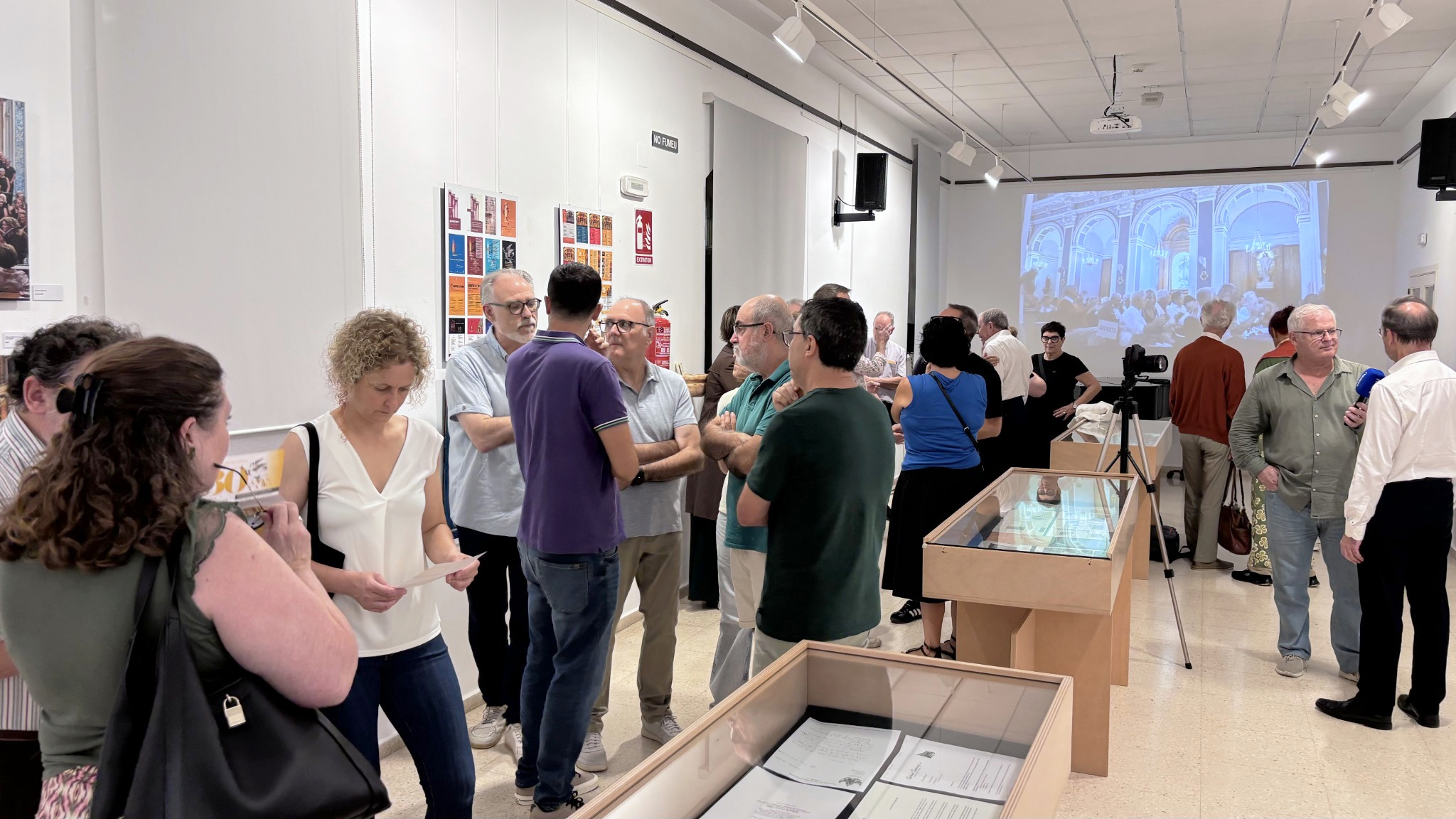
Exhibition: from 2 October to 8 November 2026
For further information:
Responsable de comunicación / Rosana Alcayde
rosana@rosanaalcayde.com / 670 27 72 08